
What is Yoga Nidra
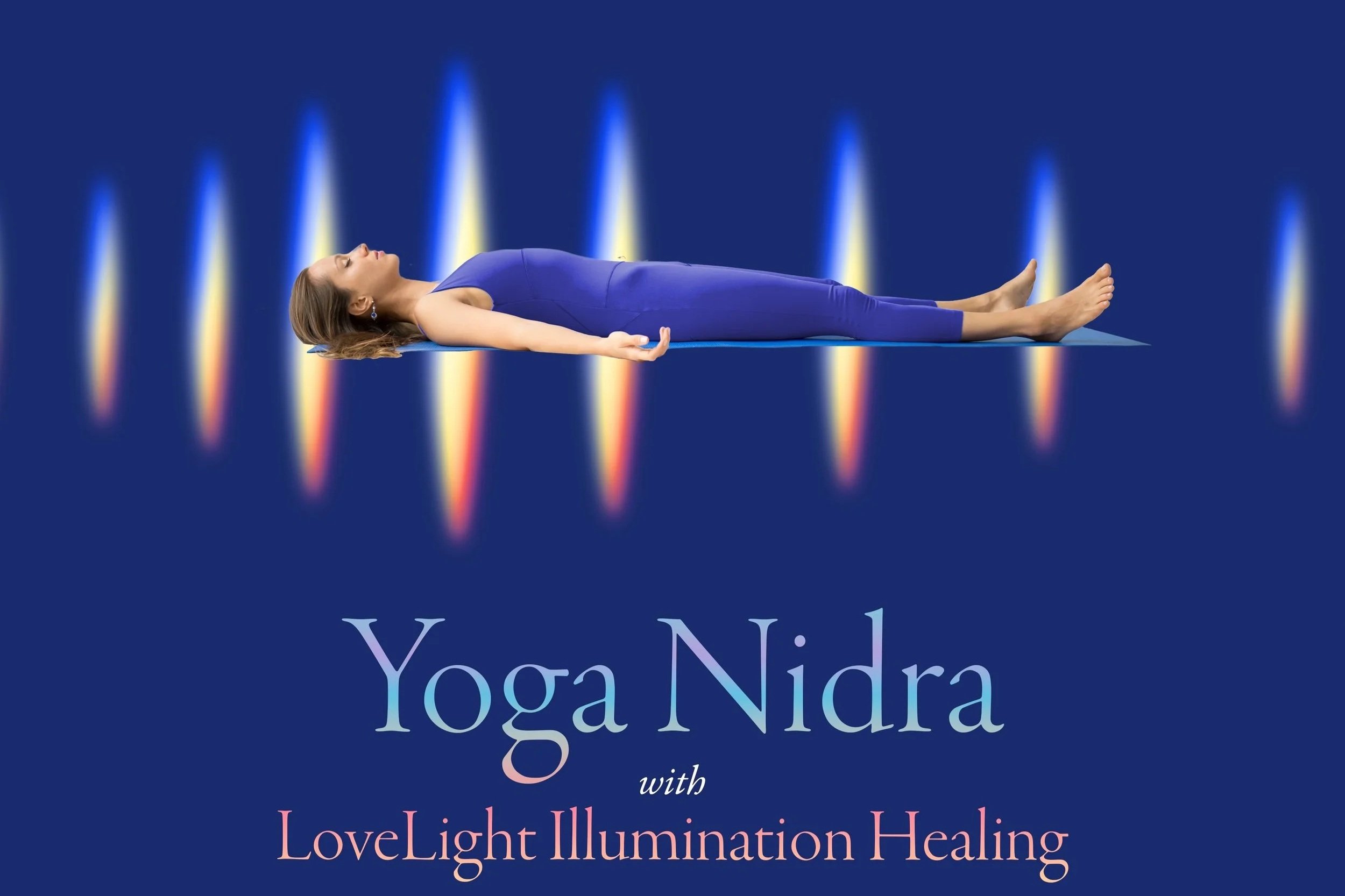
Yoga Nidra: The Practice of Deep Rest
New York City values productivity, effort, and constant forward motion. Simply living here asks a great deal of our nervous systems, and thriving often requires more support than we realize.
Yoga Nidra, often referred to as yogic sleep, offers something radically different: a state of conscious rest that nourishes the nervous system, restores the body, and steadies the mind.
As a yoga teacher/Sand Licensed Massage Therapist with over 20 years in practice, Yoga Nidra has become one of the most profound tools I return to, not only for my clients, but for my own sustainability and wellbeing.
What Is Yoga Nidra?
Yoga Nidra is a guided meditation practice that leads the practitioner into a dreamlike state, a place where the body rests deeply while awareness remains gently present.
In Yoga Nidra, Swami Satyananda Saraswati describes Yoga Nidra as:
“A state of consciousness between waking and sleeping, typically induced by a guided meditation.”
Unlike practices that require concentration or effort, Yoga Nidra asks very little of the practitioner. You lie down, you are guided, and the nervous system is given permission to downshift.
This is not sleep, though sleep may come.
This is deep restorative rest with awareness.
Why Deep Rest Matters for the Nervous System
Many of us move through life in a near constant state of activation, mentally, emotionally, and physically. Even when we stop moving, the nervous system often does not.
Yoga Nidra works directly with the parasympathetic nervous system, encouraging the body to release chronic holding patterns and settle into a state of repair.
This is one reason Yoga Nidra pairs so beautifully with massage therapy, reflexology, and energy healing, all practices that support the body’s innate ability to heal when it feels safe enough to do so.
Rest as a Sacred Practice
The importance of rest is not new. It has been named in sacred texts for thousands of years.
In the Bhagavad Gita, we are reminded of the middle path, neither excess nor deprivation:
“Yoga is not for one who eats too much, nor for one who eats too little; not for one who sleeps too much, nor for one who sleeps too little.”
Bhagavad Gita 6.16–17
This teaching speaks directly to balance and to the wisdom of honoring rest as essential, not optional.
Yoga Nidra invites us back into this balance, offering rest not as collapse, but as conscious restoration.
Yoga Nidra and the Power of Intention
One of the unique elements of traditional Yoga Nidra is sankalpa, a quiet, personal resolve offered when the mind is deeply relaxed and receptive.
Swami Satyananda Saraswati writes:
“When the mind is relaxed, as in Yoga Nidra, it becomes very powerful and receptive to positive suggestions.”
This is not about forcing change or repeating affirmations. In Yoga Nidra, the sankalpa is offered gently, without effort, at a time when the nervous system has softened and habitual resistance has quieted.
Rather than pushing the mind toward an outcome, Yoga Nidra creates the conditions for insight, clarity, and healing to arise naturally.
Why I Offer Yoga Nidra at EarthySoul
In my work at EarthySoul, I see daily how deeply people need rest, not just physical rest, but nervous system rest.
Yoga Nidra offers:
A practice accessible to all bodies
Relief from stress, anxiety, and mental fatigue
Support for emotional processing and integration
A way to rest without needing to “do it right”
It has supported my own ability to remain present, grounded, and in practice for over two decades, and it is something I return to again and again.
An Invitation to Rest Differently
Yoga Nidra reminds us that rest is not something we earn.
It is something we allow.
In a world that asks for more, Yoga Nidra offers less, and somehow, that less becomes exactly enough.
If you are craving deep rest, nervous system regulation, or simply a space to soften without effort, Yoga Nidra may be the practice you didn’t know you were missing.